
| This is a Wikipedia user page. This is not an encyclopedia article or the talk page for an encyclopedia article. If you find this page on any site other than Wikipedia, you are viewing a mirror site. Be aware that the page may be outdated and that the user whom this page is about may have no personal affiliation with any site other than Wikipedia. The original page is located at https://en.wikipedia.org/wiki/User:Olahus. |

Beliefs
|


| |||

Hi! I am the user Olahus. I am interested in the history and geography of Central, Eastern and Southeastern Europe.
I am a registered user since May 2006.
,_Almuradiel,_Ciudad_Real,_Espa%C3%B1a,_2021-12-19,_DD_07.jpg)
The Iberian lynx (Lynx pardinus) is one of the four extant species of lynx, wild cats in the family Felidae. The Iberian lynx is endemic to the Iberian Peninsula, in which it was once widespread, but it is now restricted to a small number of regions in Spain and Portugal, and is listed as vulnerable on the IUCN Red List. Fossils suggest that the species has been present in Iberia since the end of the Early Pleistocene, around one million years ago. The Iberian lynx has a short bright yellowish to tawny coloured spotted fur. Its body is short with long legs and a short tail, and its head is small with tufted ears and a ruff (hairs under the neck). It preys foremost on the European rabbit for the bulk of its diet, supplemented by red-legged partridge, rodents, and to a smaller degree also on wild ungulates. The Iberian lynx marks its territory with its urine, scratch marks on the barks of trees, and scat. The home ranges of adults are stable over many years and both males and females reach sexual maturity at one year old, although they rarely start breeding until a territory becomes vacant. This wild female Iberian lynx was photographed in Almuradiel, in the province of Ciudad Real, Spain.Photograph credit: Diego Delso
Images uploaded by me
[edit]Maps created by me
[edit]
.PNG)
.PNG)
.PNG)
.PNG)
.PNG)


.png)

.PNG)
.PNG)
.PNG)


.PNG)


Scanned images
[edit]-
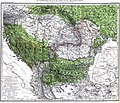
 Ethnic map of the Balkan Peninsula (1898)
 -
 The Austrian Empire during the XVII century
 -
 The Carolingian Empire after the Treaty of Verdun
 -
 Ethnic map of European Russia before the First World War
 -
 Ethnographic map of Dobruja (1918)
 -
 The Principality of Montenegro in 1862
 -
 Major Lithuanian linguistic areal in 1876.
 -
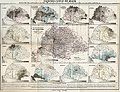
 Ethnic Germans in Hungary and parts of adjacent Austrian territories, census 1890
 -
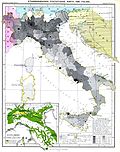 Demographic map of Italy and surroundung regions (1859)
 -
 Linguistic map of Slovenia and surrounding regions (census 1880)
 -
 Linguistic map of Istria (census 1880)
 -
 The Romanian Old Kingdom (1901)
 -
 Bulgaria in 1901
 -
 General map of Rumania (1967)
 -
 Confessions in Central Europe
 -
 Bukovina in 1901
 -
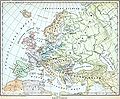 Political map of Europe (1899)
 -
 Political map of Asia (1899)
 -
 Main subdivisions of Austria-Hungary (1899).
 -
 Political map of South America (1899)
 -
 Extermination of the American Bison to 1889
 -
 The density of the railway net in Europe (1902)
 -
 Map of Greece and European Turkey (1829)
 -
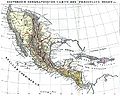
-
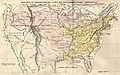 The United States in 1829
 -
 Europe in 1828
 -
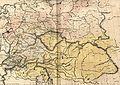 Austria-Hungary in 1828
 -
 The German confederation (1828)
 -
 The Ottoman Empire in Asia (1829)
 -
 The American continent in 1828
 -
 Africa in 1828
 -
 Asia in 1829
 -
 The Russian Empire in 1828
 -
 The world map (1829)
 -
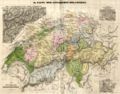 Historical map of Switzerland
 -
 The Lake Lucerne (1829)
 -

-

-

-

-

-
-

-

-
-

-
-

-

-
-

-

-
-
-

-

-

-

-

-

-

-

-

-

-

-

-
-
-

-

-
-
-
-

-
-

-
-

-

-
-

-

-

-

-

-
-
-

-

-
-

-

-
 Ethnographic map of the Epirus region, 1878. Greek point of view
 -
 Walser settlements in northwestern Italy


.JPG)

.JPG)


.jpg)
.JPG)


.JPG)


.JPG)
.jpg)
.JPG)


.JPG)


_1892.JPG)

.JPG)
.jpg)

.JPG)


.jpg)

.JPG)

.jpg)


.JPG)

.jpg)

.jpg)
.jpg)


.jpg)


.JPG)


