Wiki Article
Portal:Hotels
Nguồn dữ liệu từ Wikipedia, hiển thị bởi DefZone.Net

The Hotels Portal


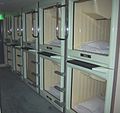
A hotel is an establishment that provides paid lodging on a short-term basis. Facilities provided inside a hotel room may range from a modest-quality mattress in a small room to large suites with bigger, higher-quality beds, a dresser, a refrigerator, and other kitchen facilities, upholstered chairs, a television, and en-suite bathrooms. Small, lower-priced hotels may offer only the most basic guest services and facilities. Larger, higher-priced hotels may provide additional guest facilities such as a swimming pool, a business center with computers, printers, and other office equipment, childcare, conference and event facilities, tennis or basketball courts, gymnasium, restaurants, day spa, and social function services. Hotel rooms are usually numbered (or named in some smaller hotels and B&Bs) to allow guests to identify their room. Some boutique, high-end hotels have custom decorated rooms. Some hotels offer meals as part of a room and board arrangement. In Japan, capsule hotels provide a tiny room suitable only for sleeping and shared bathroom facilities.
Hotel operations vary in size, function, complexity, and cost. Most hotels and major hospitality companies have set industry standards to classify hotel types. An upscale full-service hotel facility offers luxury amenities, full-service accommodations, an on-site restaurant, and the highest level of personalized service, such as a concierge, room service, and clothes-ironing staff. Full-service hotels often contain upscale full-service facilities with many full-service accommodations, an on-site full-service restaurant, and a variety of on-site amenities. Boutique hotels are smaller independent, non-branded hotels that often contain upscale facilities. Small to medium-sized hotel establishments offer a limited amount of on-site amenities. Economy hotels are small to medium-sized hotel establishments that offer basic accommodations with little to no services. Extended stay hotels are small to medium-sized hotels that offer longer-term full-service accommodations compared to a traditional hotel. (Full article...)
Recognized articles -
-

The W New York Union Square is a 270-room, 21-story boutique hotel operated by W Hotels at the northeast corner of Park Avenue South and 17th Street, across from Union Square in Manhattan, New York City. Originally known as the Germania Life Insurance Company Building, it was designed by Albert D'Oench and Joseph W. Yost and built in 1911 in the Beaux-Arts style.
The W New York Union Square building was initially the headquarters of the Germania Life Insurance Company. In 1917, when the company became the Guardian Life Insurance Company of America, the building was renamed the Guardian Life Insurance Company Building. A four-story annex to the east was designed by Skidmore, Owings & Merrill and was completed in 1961. Guardian Life moved its offices out of the building in 1999, and the W New York Union Square opened the following year. (Full article...) -
The Ryugyong Hotel (Korean: 류경호텔; sometimes spelled as Ryu-Gyong Hotel), or Yu-Kyung Hotel, is a 330 m (1,080 ft) tall unfinished pyramid-shaped skyscraper in Pyongyang, North Korea. Its name (lit. "capital of willows") is also one of the historical names for Pyongyang. The building has been planned as a mixed-use development, which would include a hotel.
Construction began in 1987 but was halted in 1992 as North Korea entered a period of economic crisis after the dissolution of the Soviet Union. After 1992, the building stood topped out, but without any windows or interior fittings. In 2008, construction resumed, and the exterior was completed in 2011. The hotel was planned to open in 2012, the centenary of founding leader Kim Il Sung's birth. A partial opening was announced for 2013 and subsequently cancelled. In 2018, an LED display was fitted to one side, which is used to show propaganda animations and film scenes. (Full article...) -
Lotte New York Palace Hotel is a luxury hotel in the Midtown Manhattan neighborhood of New York City, at the corner of 50th Street and Madison Avenue. It was originally developed between 1977 and 1980 by Harry Helmsley. The hotel consists of a portion of the Villard Houses, built in the 1880s by McKim, Mead & White, which are New York City designated landmarks and listed on the National Register of Historic Places. It also includes a 51-story skyscraper designed by Emery Roth & Sons and completed in 1980.
The Villard Houses, arranged in a U-shaped plan, consist of three wings surrounding a central courtyard on the east side of Madison Avenue. The houses' center wing serves as a lobby, while the south wing serves as an event space. Behind the Villard Houses to the east is the modern skyscraper addition. As of 2021[update], the hotel has 909 rooms and suites. The top floors of the skyscraper are known as the Towers, which consist of 176 luxury units. Among the units in the Towers are four ornate triplex suites, each with their own decorations, as well as four other specialty suites. (Full article...) -
The Royal Albion Hotel (originally the Albion Hotel) is a 3-star hotel, on the corner of Old Steine and Kings Road in Brighton, England. Built on the site of a house belonging to Richard Russell, a local doctor whose advocacy of sea-bathing and seawater drinking helped to make Brighton fashionable in the 18th century, it has been extended several times, although it experienced a period of rundown and closure in the early 20th century. A fire in 1998 caused serious damage, and the hotel was restored. However, another fire in 2023 seriously damaged the building to the extent that demolition of the western part of the building began on 19 July 2023.
The Classical-style building has three parts of different sizes and dates but similar appearances. Large pilasters and columns of various orders feature prominently. Amon Henry Wilds, an important and prolific local architect, took the original commission on behalf of promoter John Colbatch. Another local entrepreneur, Harry Preston, restored the hotel to its former high status after buying it in poor condition. The building took on its present three-wing form in 1963. The original part of the building was listed at Grade II* by English Heritage for its architectural and historical importance, and its western extension is listed separately at the lower Grade II. (Full article...) -
The Hilton Washington DC National Mall The Wharf, previously known as the L'Enfant Plaza Hotel, is a 367-room hotel located on the top four floors of a 12-story mixed-use building at the L'Enfant Plaza complex in the Southwest Federal Center neighborhood of Washington, D.C., United States. It was designed by architect Vlastimil Koubek, and was opened on May 31, 1973, as the Loews L'Enfant Plaza Hotel, named after Pierre Charles L'Enfant, the first surveyor and designer of the street layout of the city.
The hotel sits atop L'Enfant Plaza, an esplanade and plaza structure erected above a highway and a parking garage. The plaza and hotel were approved in 1955, but construction did not begin on the plaza (on which the hotel sits) until 1965. The plaza and esplanade were completed in 1968. The start of construction on the hotel was delayed three years, and was completed in May 1973. The construction led to a lawsuit after it was found that the foundation of an adjoining structure had encroached on the hotel's property. The hotel suffered a serious fire in 1975 that claimed the lives of two people. (Full article...) -

The Hotel Europa in Maracaibo, c. 1897
The Hotel Europa was a grand hotel located in Maracaibo, Venezuela. It opened in the late 19th century and served as the filming location for the first Venezuelan film, Un célebre especialista sacando muelas en el gran Hotel Europa, in 1897. Later, it was converted into other hotels with different names, most notably the Hotel Zulia, before being demolished in 1956 for the construction of the Maracaibo municipal building. (Full article...) -
The Monbar Hotel attack was carried out by the Grupos Antiterroristas de Liberación (GAL), a Spanish state-sponsored death squad, on 25 September 1985 in Bayonne, Pyrénées-Atlantiques, France. The targets were four members of the Basque separatist terrorist group Euskadi Ta Askatasuna (ETA), whom the Spanish government believed to be senior figures in the organization, itself proscribed as a terrorist group in Spain and France. All four people were killed, with a fifth person, apparently unconnected to ETA, injured in the shooting. This represented the deadliest attack carried out by the GAL. Although two of the participants were apprehended shortly after the shooting, controversy surrounded the possible involvement of senior figures in the Spanish police.
This attack, and similar attacks carried out by the GAL, became a major issue during the 1996 Spanish general election after a supreme court trial established that the Spanish Interior Ministry had provided clandestine funding for the GAL. Spanish Interior Minister José Barrionuevo and his security chief, Rafael Vera, were jailed for ten years for sanctioning a kidnapping and misappropriation of public funds to finance the group, and the GAL scandal is seen as a key factor in the Spanish Socialist Workers' Party (PSOE) losing the election, though more senior figures in the PSOE, such as Felipe Gonzalez, denied knowledge and involvement. (Full article...) -
The Virgin Hotels Chicago (formerly Old Dearborn Bank Building or 203 North Wabash Avenue) is a historic building in the Loop community area of Chicago, Illinois, that has been converted from use as an office building to use as a hotel run via a mobile app-based business model. The 250-room hotel was the first of Richard Branson's Virgin Hotels brand boutique hotels geared toward the female business traveller. (Full article...) -
The 2008 Mumbai attacks, colloquially known as 26/11, were a coordinated series of twelve Islamic terrorist attacks carried out in Mumbai, Maharashtra, India, from 26 to 29 November 2008, by ten members of the Lashkar-e-Taiba. A total of 175 people died, including nine of the attackers, and more than 300 were injured.
The attackers arrived in Mumbai via the Arabian Sea. They departed from Karachi on a Pakistani cargo vessel, hijacked an Indian fishing trawler on the way, and ended their journey to South Mumbai's coastline on inflatable boats. Eight of the attacks were mass shootings in South Mumbai at Chhatrapati Shivaji Terminus, Trident Hotel, Taj Mahal Palace Hotel, Leopold Cafe, Cama Hospital, Nariman House, Metro Big Cinemas, and in a lane behind St. Xavier's College and the headquarters of The Times of India. In addition to the mass shootings, an explosion occurred at Mazagaon, in Mumbai's port area, and in a taxi at Vile Parle. By the early morning of 28 November, all sites except for the Taj Hotel had been secured by the Mumbai Police and security forces. On 29 November, India's National Security Guards conducted Operation Black Tornado to flush out the remaining terrorists; it culminated in the death of the last remaining terrorists at the Taj Hotel and ended the attacks. (Full article...) -
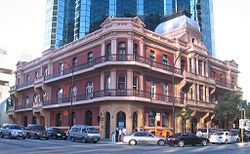
The Palace Hotel in Perth, Western Australia, is a landmark three-storey heritage listed building located in the city's central business district. Originally built in 1897 as a hotel during the gold rush period of Western Australia's history, it was converted to banking chambers and offices in the 1980s and now accommodates the Perth headquarters of Woods Bagot, Adapptor and Hatchd. The building is located on the most prominent intersection in the financial district of the city, on the corner of St Georges Terrace and William Street.
When the hotel opened for business on 18 March 1897 it was, although slightly smaller than some of its contemporary buildings in other capital cities in Australasia, described as "one of the most beautiful and elegant hotels in Australasia". Other praise included: "redolent of the bourgeois luxury and splendour of the Paris of Napoleon III" and later "in its day, as sumptuous a hostelry as any in Melbourne or Sydney." It operated as licensed premises from 1897 until 1981. (Full article...) -
Sauganash Hotel (originally Eagle Exchange Tavern) was a hotel regarded as the first hotel in Chicago, Illinois. Built in 1831, the hotel was located at Wolf Point in the present-day Loop community area at the intersection of the north, south and main branches of the Chicago River. The location at West Lake Street and North Wacker Drive (formerly Market Street) was designated a Chicago Landmark on November 6, 2002. The hotel changed proprietors often in its twenty-year existence and its dining hall area briefly served as Chicago's first commercial theater. It was named after Billy Caldwell, called Sauganash meaning Englishman, a captain in the British Indian Department and son of William Caldwell. (Full article...) -
The Hôtel d'Alluye is an hôtel particulier in Blois, Loir-et-Cher, France. Built for Florimond Robertet when he was secretary and notary to Louis XII, the residence bears the name of his barony of Alluyes. On Rue Saint-Honoré near Blois Cathedral and the Château de Blois, it is now significantly smaller than it was originally as the north and west wings were destroyed between the seventeenth and nineteenth centuries.
Built between 1498 (or 1500) and 1508, the hôtel particulier is one of the first examples of Renaissance architecture in Blois. Its façades consist of Gothic, French Renaissance and Italian Renaissance architecture. The Hôtel d'Alluye was owned by the Robertet family from 1508 until 1606 before undergoing frequent changes in ownership; since 2007, it has been divided into ten apartments and a large office. (Full article...) -
The Brinks Hotel in Saigon, also known as the Brink Bachelor Officers Quarters (BOQ), was bombed by the Vietcong on the evening of 24 December 1964, during the Vietnam War. Two Vietcong operatives detonated a car bomb underneath the hotel, which housed United States Army officers. The explosion killed two Americans, an officer and an NCO, and injured approximately 60, including military personnel and Vietnamese civilians.
The Vietcong commanders had planned the venture with two objectives in mind. Firstly, by attacking an American installation in the center of the heavily guarded capital, the Vietcong intended to demonstrate their ability to strike in South Vietnam should the United States decide to launch air raids against North Vietnam. Secondly, the bombing would demonstrate to the South Vietnamese that the Americans were vulnerable and could not be relied upon for protection. (Full article...) -
The Plaza Hotel (also known as The Plaza) is a luxury hotel and condominium apartment building in Midtown Manhattan in New York City. It is located on the western side of Grand Army Plaza, after which it is named, just west of Fifth Avenue, and is between 58th Street and Central Park South (a.k.a. 59th Street), at the southeastern corner of Central Park. Its primary address is 768 Fifth Avenue, though the residential entrance is One Central Park South. Since 2018, the hotel has been owned by the Qatari firm Katara Hospitality.
The 18-story, French Renaissance-inspired château style building was designed by Henry Janeway Hardenbergh. The facade is made of marble at the base, with white brick covering the upper stories, and is topped by a mansard roof. The ground floor contains the two primary lobbies, as well as a corridor connecting the large ground-floor restaurant spaces, including the Oak Room, the Oak Bar, the Edwardian Room, the Palm Court, and the Terrace Room. The upper stories contain the ballroom and a variety of residential condominiums, condo-hotel suites, and short-term hotel suites. At its peak, the Plaza Hotel had over 800 rooms. Following a renovation in 2008, the building has had 282 hotel rooms and 181 condos. (Full article...) -
Hotel Valley Ho is a historic hotel in Scottsdale, Arizona. Also called the Valley Ho and, for 28 years, the Ramada Valley Ho, the hotel was designed by Edward L. Varney. It first opened in 1956 with a forward-looking and futuristic design. Movie stars and famous baseball players stayed, and the building quickly became known for its trendsetting guests and its fashionable atmosphere. The success of the venture resulted in expansion in 1958, with two additional two-story wings of guest rooms extending to the north. Though proposed by Varney, a central tower of guest rooms, rising over the lobby, was not built.
The property was bought by the Ramada hotel chain in 1973, and was redecorated to cover the 1950s design, seen at the time as outdated. No longer in vogue, but centrally located, the hotel remained prominent for years, and hosted conferences, business meetings, and vacationers. Under Ramada management, however, the property began to show a lack of maintenance, and its popularity declined. It closed in 2001 and its demolition was considered when no purchase offers were received. Admirers of the hotel's exemplary architecture and its local history rallied to save it, and it was placed on the Scottsdale Historic Register. (Full article...)

.jpg)


.jpg)


General images -
-

-

-

-
 Dutchmaid Motel, 10 miles north of Lancaster, Pennsylvania (from Motel)
 -
 Wynn Palace, Macau (from Hotel)
 -
-

-
 Tremont House in Boston, United States, a luxury hotel, the first to provide indoor plumbing (from Hotel)
 -
 A typical motel lobby at the Rocket Motel in Custer, South Dakota (from Motel)
 -

-
 A large pool at the Thunderbird Motel on the Columbia River in Portland, Oregon (1973). (from Motel)
 -
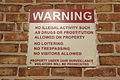 Sign on Chicago motel (from Motel)
 -
-
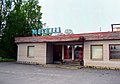
 Abandoned Grand West Courts in Chicago, demolished in September 2013 (from Motel)
 -
 The 4 Seasons Motel sign in Wisconsin Dells, Wisconsin is an excellent example of googie architecture. (from Motel)
 -
 The Waldorf Astoria New York, the most expensive hotel ever sold, cost US$1.95 billion in 2014. (from Hotel)
 -
 Hotel at Brighton beach in Victoria Australia (from Hotel)
 -
 The Tabard Inn, Southwark, London (from Hotel)
 -

-
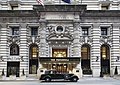 The Peninsula New York (from Hotel)
 -

-
-
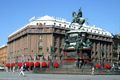
 Shanghai Disneyland Hotel, China (from Hotel)
 -
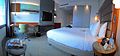 A typical hotel room with a bed, desk, and television (from Hotel)
 -
 Burj Al Arab stands on an artificial island from Jumeirah Beach and is connected to the mainland by a private curving bridge (from Hotel)
 -
 Capella Resort, Singapore (from Hotel)
 -
 Lobby on 103rd floor at The Ritz-Carlton, Hong Kong (from Hotel)
 -

-
-
 Wigwam Motel No. 6, a unique motel/motor court on historic Route 66 in Holbrook, Arizona (from Motel)
 -

-
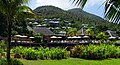 Raffles Praslin, Seychelles (from Hotel)
 -
 Rosewood Hong Kong (from Hotel)
 -
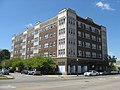 An apartment hotel in Hammond, Indiana (from Apartment hotel)
 -
 The Harrison Hotel, an SRO hotel in Oakland, California. (from Apartment hotel)
 -
 Atlantis The Royal, Dubai, United Arab Emirates (from Hotel)
 -
 The Mid-Trail Motel & Inn in Pleasant Bay, Nova Scotia, Canada, 2010 (from Motel)
 -

-
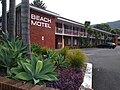 A motel in Thirroul, New South Wales, Australia (from Motel)
 -

-
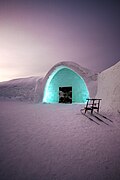 Ice Hotel in Jukkasjärvi, Sweden (from Hotel)
.jpg)


.jpg)


_b.jpg)


_(cropped).jpg)


In the news
- 5 June 2026 – 2026 Cuban crisis
- Hotel operator Archipelago International ends management agreements for six hotels in Cuba, citing compliance with United States sanctions. (AFP via The Manila Times)
- 1 June 2026 – 2026 Cuban crisis
- Canadian hotel operator Blue Diamond Resorts ends its operations in Cuba, citing reduced air service and operational challenges after managing 62 properties on the island. (AFP via Indo Premier)
Selected articles -
-
4 Park Avenue (formerly known as the Vanderbilt Hotel) is a 22-story building in the Murray Hill neighborhood of Manhattan in New York City. Designed by Warren and Wetmore, the structure was built for Alfred Gwynne Vanderbilt and opened in 1912 as a hotel. It is along the west side of Park Avenue between 33rd and 34th Streets. Following a renovation by Schuman, Lichtenstein & Claman between 1965 and 1967, the top 18 stories have been used as residential apartments. The lowest three stories above ground, as well as three basement levels, are used as commercial space and carry an alternate address of 6 Park Avenue. As of 2021[update], the building is owned by The Feil Organization.
4 Park Avenue's facade was originally made of gray brick and white architectural terracotta. The facade of the lowest four stories dates from the 1960s renovation and is made of glass and steel. Above that, the building retains its original facade and has two light courts facing Park Avenue. The building has a steel superstructure and had mechanical equipment in its basements. The hotel's lobby was designed in the Adam style and is partially preserved as the modern residential lobby. The first basement had a grill room known as the Della Robbia Room, decorated ornately with Guastavino tile; part of the room survives and is designated as a New York City interior landmark. The upper stories had close to 600 rooms, and the top two stories originally contained a private penthouse apartment for A. G. Vanderbilt and his family.
After several years of planning and construction, the Vanderbilt Hotel opened on January 10, 1912, as one of the first large commercial developments in Murray Hill. The Vanderbilt soon became a popular meeting place for companies in the textile and women's apparel industries. A syndicate bought the hotel in 1925, and the New York Life Insurance Company foreclosed on the hotel in 1935. Manger Hotels acquired the hotel in 1941 and continued to operate it until the hotel closed in 1965. A group led by John Marqusee bought the building in 1966 and spent the next year converting the hotel into residences and offices. The building has undergone minor renovations over the years. (Full article...) -
The Alpine Motel Apartments fire occurred in downtown Las Vegas, Nevada, on December 21, 2019. The three-story building, constructed in 1972, had failed several fire inspections and received numerous code enforcement complaints in the years prior to the fire. Some residents did not have working heaters and were using their kitchen stoves for warmth, which led to the fire. It killed six residents and injured 13 others. It is the deadliest fire to occur in Las Vegas city limits. As a result, the city increased its inspections of older apartment buildings.
Adolfo Orozco purchased the building in 2013, and criminal charges were filed against him and associate Malinda Mier in July 2020, accusing them of involuntary manslaughter and negligence. A preliminary hearing began in August 2020, and eventually concluded in May 2023. All charges against Mier were dismissed, while Orozco was ordered to stand trial. He ultimately took a plea deal in January 2025. Various civil lawsuits were also filed against Orozco, before being settled in March 2023.
In 2021, the Alpine was sold to a partnership of companies which reopened it in 2023, as studio apartments under the name DLUX Lofts. (Full article...) -
The Waldorf-Astoria was a hotel on Fifth Avenue in Manhattan, New York City, built in 1893 and razed in 1929. It originated as two hotels, built side by side by feuding relatives, was expanded in 1897, and razed to make way for construction of the Empire State Building. Their successor, the current Waldorf Astoria New York, was built on Park Avenue in 1931.
The original Waldorf Hotel opened on March 13, 1893, at the corner of Fifth Avenue and 33rd Street, on the site where millionaire developer William Waldorf Astor had previously built his mansion. Constructed in the German Renaissance style by Henry Janeway Hardenbergh, it stood 225 feet (69 m) high, with 15 public rooms and 450 guest rooms, and a further 100 rooms allocated to servants, with laundry facilities on the upper floors. It was heavily furnished with antiques purchased by founding manager and president George Boldt and his wife during an 1892 visit to Europe. The Empire Room was the largest and most lavishly adorned room in the Waldorf, and soon after opening it became one of the best restaurants in New York, rivaling Delmonico's and Sherry's.
The Astoria Hotel opened in 1897 on the southwest corner of Fifth Avenue and 34th Street, next door to the Waldorf. It was also designed in the German Renaissance style by Hardenbergh, at a height of about 270 feet (82 m), with sixteen stories, twenty-five public rooms and 550 guest rooms. The ballroom, in the Louis XIV style, has been described as the "pièce de résistance" of the hotel, with a capacity to seat 700 at banquets and 1,200 at concerts. The Astor Dining Room was faithfully reproduced from the original dining room of the mansion which once stood on the site. (Full article...) -
The Royal Jomtien Resort Hotel was a 450-room luxury hotel situated in a 17-story high-rise building on the northern end of Jomtien Beach, 110 kilometres (68 mi) south of Bangkok. At approximately 10:20 local time (03:20 GMT), 11 July 1997, a fire ignited as a result of a faulty liquid propane gas cylinder in a ground floor buffet of the hotel. The fire burned for 8 to 12 hours across all floors and caused the deaths of at least 91 people and injuries to a further 63.
A National Fire Protection Association report attributed the ignition of the fire to human error by a worker who had identified faulty valve assembly on gas cylinder in a ground-floor buffet; while attempting to shut off the valve, the worker inadvertently increased the flow of gas and caused an explosion. The combustible wood and vinyl furnishings of the establishment allowed the fire to develop rapidly, as did a lack of fire separation, compartmentation and active suppression systems. As acrid smoke overcame the entire complex, several victims reportedly jumped from the higher windows to their deaths.
At the time of the fire the building was 8 years old and had therefore been constructed prior to 1992 laws dictating mandatory installation of fire alarms and smoke detectors in Thai high-rise hotels. The fire prompted a review of safety standards of other high rise buildings in Chon Buri and at least 200 other buildings in the Pattaya area were found not to comply with the fire safety standards that had been violated by the Royal Jomtien Resort Hotel prior to the fire. (Full article...) -

The Westin St. Francis, formerly known as St. Francis Hotel, is a hotel located on Powell and Geary Streets in San Francisco, adjacent to the whole western edge of Union Square. The two 12-story south wings of the hotel were built in 1904, and the double-width north wing was completed in 1913, initially as apartments for permanent guests. This section is referred to as the Landmark Building on the hotel's website. The 32-story, 120 m (390 ft) tower to the rear, referred to as the Tower Building, which was completed in 1972, features exterior glass elevators that offer panoramic views of the bay and the square below, making the St. Francis one of the largest hotels in the city, with 1,195 rooms and suites. (Full article...) -

Hotels.com, L.P. is a website for booking hotel rooms owned by Expedia Group. Hotels.com was established in 1991 as the Hotel Reservations Network (HRN) and in 2002 changed its name to Hotels.com. (Full article...) -

Shepheard's Hotel entrance, c. 1930
Shepheard's Hotel was the leading hotel in Cairo and one of the most celebrated hotels in the world from the middle of the 19th century until its destruction in 1952 during the Cairo Fire. It was located across from the Azbakeya Gardens (). Five years after the original hotel was destroyed, a new one was built on the bank of the Nile and it was named the Shepheard Hotel (). (Full article...) -
Britannia Hotels is a British budget hotel group with 64 hotels in Great Britain. The company also owns the Pontins Holiday Parks.
Since 2010, Britannia Hotels has been a subject of criticism over the hygiene and maintenance of its locations; consumer group Which? repeatedly found the chain to be the worst in the United Kingdom since October 2013. The criticism has contributed towards the growing general perception of Britannia Hotels as "Britain's worst hotel chain". (Full article...) -

Howard Johnson by Wyndham, still commonly referred to as Howard Johnson's, is an American hotel brand with nearly 300 hotels in 15 countries. It was also formerly a restaurant chain, which at one time was the largest in the U.S., with more than 1,000 locations. Since 2006, all hotels and company trademarks, including those of the defunct restaurant chain, have been owned by Wyndham Hotels and Resorts.
Howard Johnson's restaurants originally started as a single location opened by Howard Deering Johnson in 1925 and grew into a substantial restaurant chain in the decades that followed. By the 1950s, the company expanded operations by opening hotels, then known as Howard Johnson's Motor Lodges, which were often located next to restaurants. Throughout the 1960s and 1970s, it had become the largest restaurant chain in the U.S., with its combined company-owned and franchised outlets. Howard Johnson's served more meals outside the home during the 1960s than any other company or organization except for the United States Army.
Howard Johnson's restaurants were franchised separately from the hotel brand beginning in 1986 but, in the years that followed, severely dwindled in number until eventually disappearing altogether. The last restaurant, in Lake George, New York, closed in 2022. The line of branded supermarket frozen foods, as well as its famous ice cream, are no longer manufactured. (Full article...) -
The Kimpton Hotel & Restaurant Group is a San Francisco-based hotel and restaurant brand owned by IHG Hotels & Resorts (IHG) since 2015. It was founded in 1981. (Full article...)
-

The former Milestone Mo-Tel, San Luis Obispo, California, 2005.
The Motel Inn (originally known as the Milestone Mo-Tel), located in San Luis Obispo, California, United States, was the first "motel" in the world, and the origin of that word, from "Mo-Tel", which is a portmanteau "hotel" by combining the words "motor hotel". It opened on December 12, 1925, and closed in 1991. The Apple Farm Inn, located next door, is expanding and incorporating parts of the original hotel that are still standing into additional rooms. (Full article...) -
The New Yorker Hotel is a mixed-use building at 481 Eighth Avenue in the Hell's Kitchen neighborhood of Manhattan in New York City. Opened in 1930, the building was designed by Sugarman & Berger in the Art Deco style and is 42 stories high, with four basement stories. The building is owned by the Unification Church of the United States, which rents out the lower stories as offices and dormitories. The upper stories comprise the hotel, which has 1,083 guestrooms and has been operated by Lotte Hotels since 2025. The 1-million-square-foot (93,000-square-meter) building also contains three restaurants and approximately 33,000 square feet (3,100 m2) of conference space.
The facade is largely made of brick and terracotta, with Indiana limestone on the lower stories. There are setbacks to comply with the 1916 Zoning Resolution, as well as a large sign with the hotel's name. The building contains a power plant and boiler room in its fourth basement, which was an early example of a cogeneration plant. The public rooms on the lower stories included a Manufacturers Trust bank branch, a double-height lobby, and multiple ballrooms and restaurants. Originally, the hotel had 2,503 guestrooms from the fourth story up.
The New Yorker was built by Mack Kanner and was originally operated by Ralph Hitz, who died in 1940 and was succeeded by Frank L. Andrews. Hilton Hotels bought the building in 1954 and, after conducting extensive renovations, sold it in 1956 to Massaglia Hotels. New York Towers Inc. acquired the building in 1959 but surrendered the property to Hilton in 1967 as part of a foreclosure proceeding. The hotel was closed in 1972 and sold to the French and Polyclinic Medical School and Health Center, which unsuccessfully attempted to develop a hospital there. The Unification Church purchased the building in 1976 and initially used it as a global headquarters. After the top stories of the building reopened as a hotel in 1994, the lower stories were used as offices and dormitories. The hotel rooms have undergone multiple renovations since the hotel reopened. The New Yorker joined the Ramada chain in 2000, then it was transferred to the Wyndham brand in 2014 and to Lotte in 2025. (Full article...) -

A 1792 painting of a Hindu temple and choultry (a travelers' rest house)
Choultry is a resting place, an inn or caravansary for travelers, pilgrims or visitors to a site, typically linked to Buddhist, Jain and Hindu temples. They are also referred to as chottry, choultree, chathra, choltry, chowry, chawari, chawadi, choutry, chowree or tschultri.
This term is more common in South India, Central India and West India, while in North India similar facilities are called Dharmshalas. They are known as a chatra, satram, chatram or dharmasala in eastern regions of India. The choultry concept and infrastructure in South Asia dates back to at least the 1st millennium, according to epigraphical evidence such as stone and copper plate inscriptions.
A choultry provides seating space, rooms, water and sometimes food financed by a charitable institution. Its services are either at no cost, or nominal rates, or it is up to the visitor to leave whatever they wish as a donation. They were also used by officials traveling on public business. Many major temples have mandapam and pillared halls, some called Thousand pillared halls with an attached kitchen for servicing pilgrims and travelers to the temple. The term choultry may overlap with a mandapa. Many Hindu monasteries (matha) also built and operated such choultries. (Full article...) -

Sheraton Hotels and Resorts is an American international hotel chain owned by Marriott International. As of December 2024[update], Sheraton operates 431 hotels with 150,640 rooms globally, including locations in North America, Africa, Asia-Pacific, Central and South America, Europe, the Middle East and the Caribbean. (Full article...) -
The Madonna Inn is a motel in San Luis Obispo, California. Opened in 1958, it quickly became a landmark on the Central Coast of California. It is noted for its unique decor, pink dining room, and themed rooms. It was created by Alex Madonna, a successful construction magnate and entrepreneur (d. April 2004), and his wife Phyllis. The inn includes a restaurant and bakery, and is located on the west side of US Route 101 and situated on the lower eastern portion of Cerro San Luis Obispo. (Full article...)


,_Binjaveram_Tinnevelly_district,_Tamil_Nadu_India.jpg)
.svg)

Did you know (auto-generated)

- ... that in 1987, an estimated one-sixth of New York City's homeless children lived at the Martinique Hotel, even though it lacked basic facilities like kitchens?
- ... that the Rydges Hotel in Christchurch, New Zealand, has been empty since the 2011 earthquake?
- ... that a red light in the corner bay window of the Ansorge Hotel told rumrunners of revenue men in town?
- ... that the Hotel Wolcott had to be sold less than a year after it opened?
- ... that New York City's Hotel Marseilles, once a shelter for Holocaust survivors, later became affordable housing for the elderly?
- ... that the Hotel Normandie supported the Leaders of the World?
- ... that the eventual location of Cancún's Hotel Zone was chosen in part by a computer program in the late 1960s?
- ... that a restaurant in a Thai hotel serves "Chicken Volcano", a dish containing whiskey?
Related portals


WikiProjects

List articles

- Historic Hotels of America
- List of largest hotels
- List of largest hotels in Europe
- List of tallest hotels
- List of casino hotels
- List of chained-brand hotels
- List of defunct hotel chains
- List of hotels in the Caribbean
- List of caravanserais
- Lists of hotels
- List of motels
- Lists of hotels by country (category page)
- Lists of hotels by city (category page)
Topics

|
| ||||||||||||||||||||||||||||||||||||||||||||||||||||||||||||||||||||||||||||||||||||||||||||||||||||||||||||||||||||||||||||||||||||||||||||||||||||||||||||||||||||||||||||||||||||||||||||||||||||||||||||||||||||||||||||||||||||||||||||||||||||||||||||||||||||


Categories

Associated Wikimedia
The following Wikimedia Foundation sister projects provide more on this subject:
-
 Commons
Free media repository -
 Wikidata
Free knowledge base -
 Wikiquote
Collection of quotations -
 Wikisource
Free-content library -
 Wikiversity
Free learning tools -
 Wiktionary
Dictionary and thesaurus


More portals


